
Behind the Making of Forgotten Island

Spark Forward is a series of event recaps and essays about film and filmmaking. It is part of Treepot Spark, a collection of initiatives aimed at igniting creativity and collaboration among creatives.
The Ottawa International Animation Festival (OIAF) recently wrapped up its landmark 50th anniversary edition, which brought animators, students, artists, and fans from around the world to Ottawa from September 23 to September 27. Early in the festival, attendees, students, and members of the media gathered for an advance screening of Forgotten Island at the historic Bytowne Cinema.
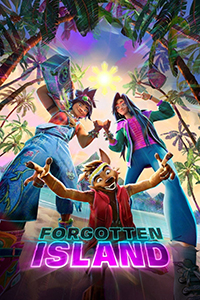
Directed and written by Joel Crawford and Januel P. Mercado, the film follows two best friends who become stranded on the mystical world of Nakali, where their only escape might come at the cost of their shared lifetime of memories.
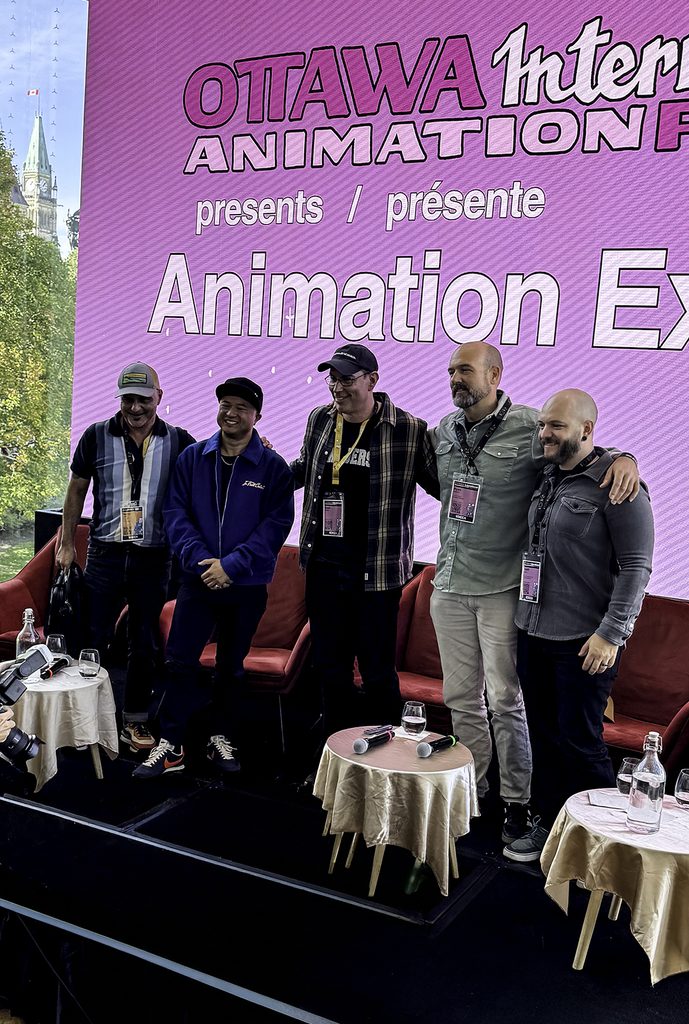
On Saturday, Sept. 26, the festival hosted a panel featuring several key members of the Forgotten Island creative team: co-director Januel P. Mercado, head of cinematography Scott Cullen, head of character animation Sean Sexton, and production designer Ryan Carlson. Moderated by Ramin Zahed from Animation Magazine, the discussion offered attendees an insider’s look at the making of the film, from its visual design to the development of its characters.
Crawford and Mercado previously collaborated on major franchise hits, including Kung Fu Panda, Trolls, and Puss in Boots: The Last Wish. After years of working together, the directors decided to create an original film deeply rooted in Filipino culture.
Inspired by the narrative setup of The Hangover and drawing heavily on a 1990s aesthetic, the film explores core themes of friendship and memory. That real-life creative connection is echoed through the relationship between the film’s two main characters, Jo and Raissa.
To refine the character performances, the team brought in Allen Simpson, an acting coach who has previously worked with DreamWorks and Pixar. Simpson worked closely with the team to develop Jo and Raissa’s dynamic. Drawing inspiration from the series PEN15, he also curated a character playlist to help the animators capture the specific energy and rapport the filmmakers envisioned.
Several character concepts were altered or cut during production to stay within budget. Jo was originally designed with a cape, which was removed as a cost-saving measure. Raissa’s design also underwent significant iteration.
“I was playing with the idea of the wings, and how they could attach to Raissa. It didn’t make it into the movie, but they could have had this octopus-like shape-shifting ability to become Raissa’s skirt… Maybe for a future installment,” said Mercado.
The film’s villain, the dreaded Manananggal, was physically inspired by Kurt Barlow from Stephen King’s ‘Salem’s Lot, featuring sharp teeth and snake-like eyes. For her movement, the animators drew heavy inspiration from classic horror films The Ring and The Grudge. The character’s visual design was also simplified over time.
“At one point, she had three wings. We had to simplify a little bit,” said production designer Ryan Carlson. “They also, at one point, turned into a dress that wrapped around her.”
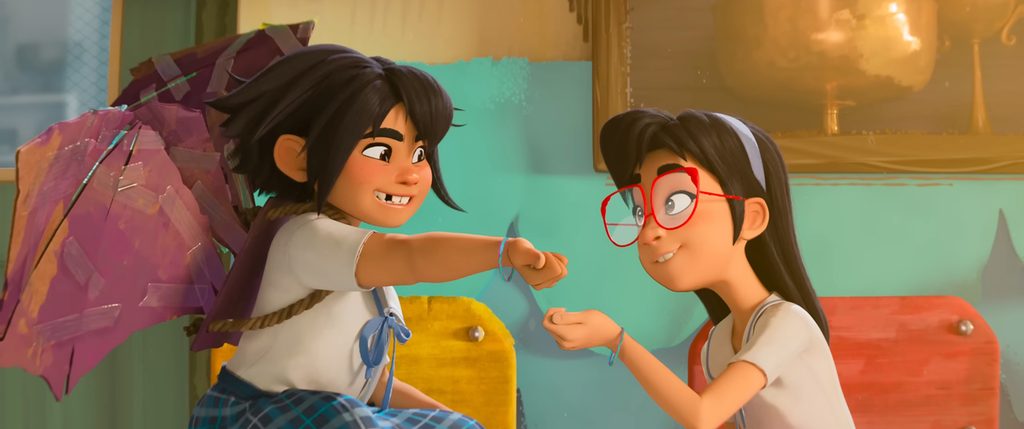
When designing the film’s primary settings, the Philippines and Nakali Island, the team wanted to contrast the two worlds while ensuring both felt magical, authentic, and lived-in. The Philippine sequences feature a warm palette with a homey, romantic atmosphere and soft lighting. In contrast, Nakali boasts a vibrant, wild, party-like atmosphere, complete with blacklight-inspired visuals and neon hues reflecting the island’s magic.
“Our main goal was to really differentiate the look of the Philippines versus the look of Nakali, beyond just the language and character shifts,” said Scott Cullen, head of cinematography. “The big thing that we wanted to achieve was shooting the Philippine sequences pretty drastically differently from Nakali.”
To achieve this, the team used longer lenses for the Philippine scenes, keeping focal lengths to 50mm and above. The depth of field was kept shallow, leaving backgrounds softly out of focus.
“Not just to keep the look distinct, but another big reason for that was we wanted these Philippine sequences to feel very intimate, keeping us close with the characters when they’re younger,” Cullen explained.
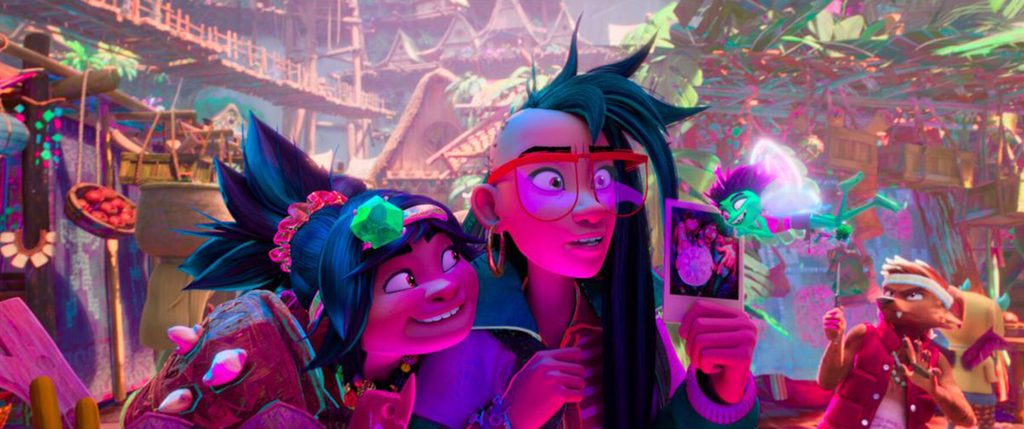
When the story transitions to Nakali Island, the camera team changed their lensing and framing to showcase the expanded world.
“We really wanted to drastically shoot the Nakali sequences differently,” said Cullen. “To counter the longer lenses used in the Philippines, once we wake up on the island, we switched to ultra-wide.”
Other visual elements evolved dynamically during production, including the pivotal moment when the portal opens.
“Early on, we knew that we wanted the portal to take the shape of the Philippine sun,” said Mercado. “It eventually evolved into a sinkhole in the ground.”
The visual style and expressive character animations were also heavily influenced by Japanese anime. The team referenced series and films like Mob Psycho 100, Wolf Children, and One-Punch Man.
“I knew nothing about anime when I came onto the project, so we started doing ‘Anime Fridays,’” said Sean Sexton, head of character animation. “We would watch different movies together so the whole team could get up to speed with the style.”
Ultimately, the panel revealed that Forgotten Island is a testament to the power of collaborative evolution in storytelling and animation. By blending personal cultural heritage, diverse aesthetic influences, and clever technical choices, the creative team crafted a world that feels both deeply personal and grand in scale, leaving Ottawa audiences with a memorable highlight from the OIAF’s milestone 50th year.
More info & links:
- Directors: Joel Crawford, Januel P. Mercado
- Writers: Joel Crawford, Januel P. Mercado
- Producers: Mark Swift, Zachary Gold
- Cast: H.E.R., Liza Soberano, Dave Franco
- Forgotten Island on IMDB
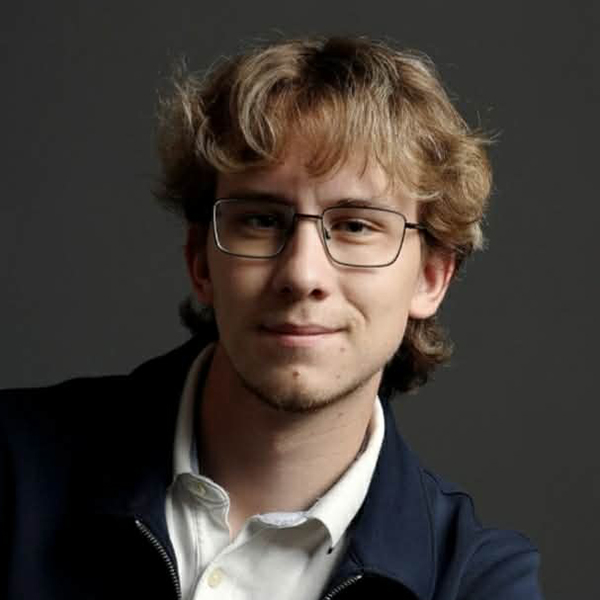
Matthew Grieve
Reporter, Film Reviewer
Matthew Grieve is currently pursuing an undergraduate degree in Digital Journalism at the University of Ottawa after graduating from Algonquin College’s journalism program. He’s passionate about life and all its little wonders and is always chasing his next adventure. His ambition keeps him going, and he enjoys meeting new people, sharing stories, and watching movies. One day, he hopes to open a cozy bed and breakfast where he can welcome guests and swap stories with them.
Follow Matthew on Instagram and LinkedIn.
Follow Matthew on Instagram and LinkedIn.


