
The Making of Ray Gunn: Brad Bird Unveils His Passion Project

Spark Forward is a series of event recaps and essays about film and filmmaking. It is part of Treepot Spark, a collection of initiatives aimed at igniting creativity and collaboration among creatives.
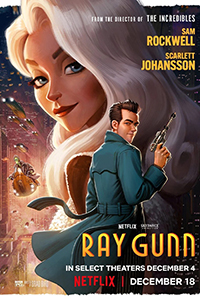
Ray Gunn is the newest film from Director Brad Bird, 30 years in the making. This sci-fi detective story follows private investigator Raymond Gunn in Metropia, a gigantic city set in an alternate future envisioned from 1939. Gunn finds himself drawn into a case involving aliens, murder and a multimedia star named Venus Nova.
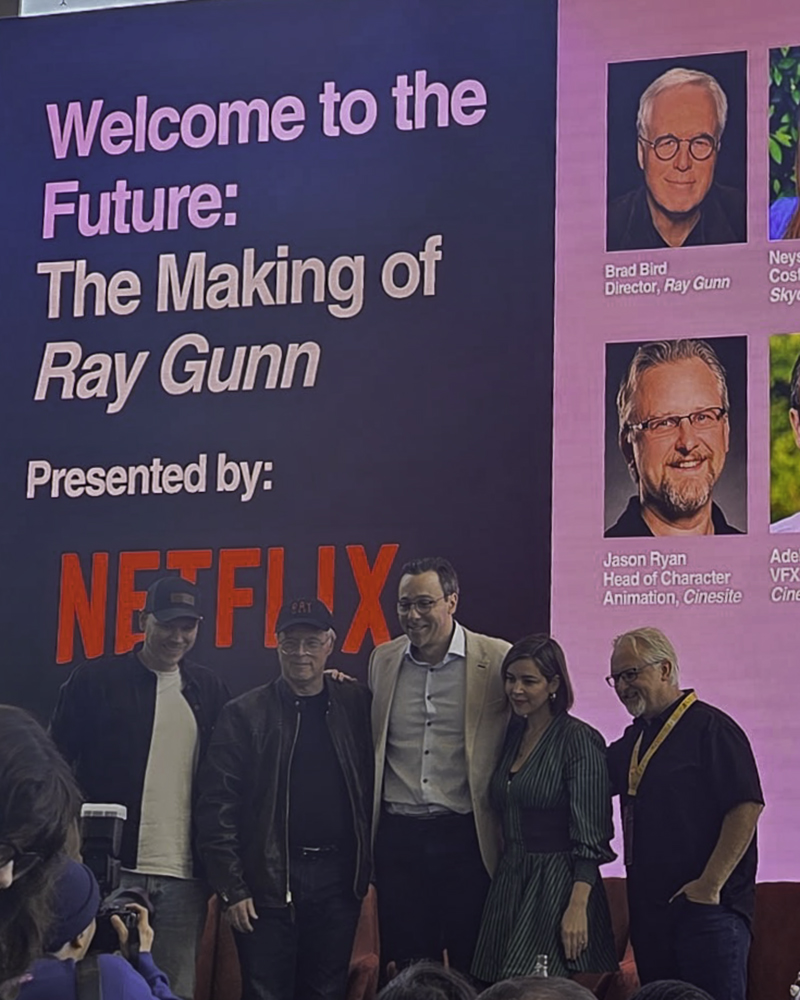
During the Ottawa International Animation Festival (OIAF), held earlier this year, a panel discussion titled “The Making of Ray Gunn” featured director, writer and producer Brad Bird, costume designer Neysa Bové, head of animation Jason Ryan, and visual effects supervisor Adel Abada, moderated by Jamie Lange from Cartoon Brew.
After screening the first seven minutes of the film, Abada started by exploring the cinematography and city building. Even though Ray Gunn draws heavily from film noir, Abada explained that the story itself ultimately drives the visual language. One of the team’s primary stylistic influences was the 1974 classic Chinatown.
The artists studied the period mystery to deconstruct its visual style. Although the production was shot using anamorphic lenses while Ray Gunn utilizes spherical lenses, the team wanted to capture a similar atmosphere and cinematic weight.
“We used 28mm lenses, which are somewhat uncommon in animated feature films because lenses below 30mm or 40mm can begin to distort space,” said Abada. “However, our approach was that we were making a film, so we wanted to use the full language of cinematography to tell our story.”
The lighting was also inspired by the work of cinematographers Conrad Hall, Vittorio Storaro, as well as films such as L.A. Confidential.
“The movie was done in 18 months. It’s 1,800 shots spread over 35 sequences. Out of these 35 sequences, 8 are exteriors, and half of those are chasing scenes,” said Abada. Designing a city that stretches a mile high while conveying both massive scale and high-speed momentum proved to be a challenge, according to the visual effects supervisor.
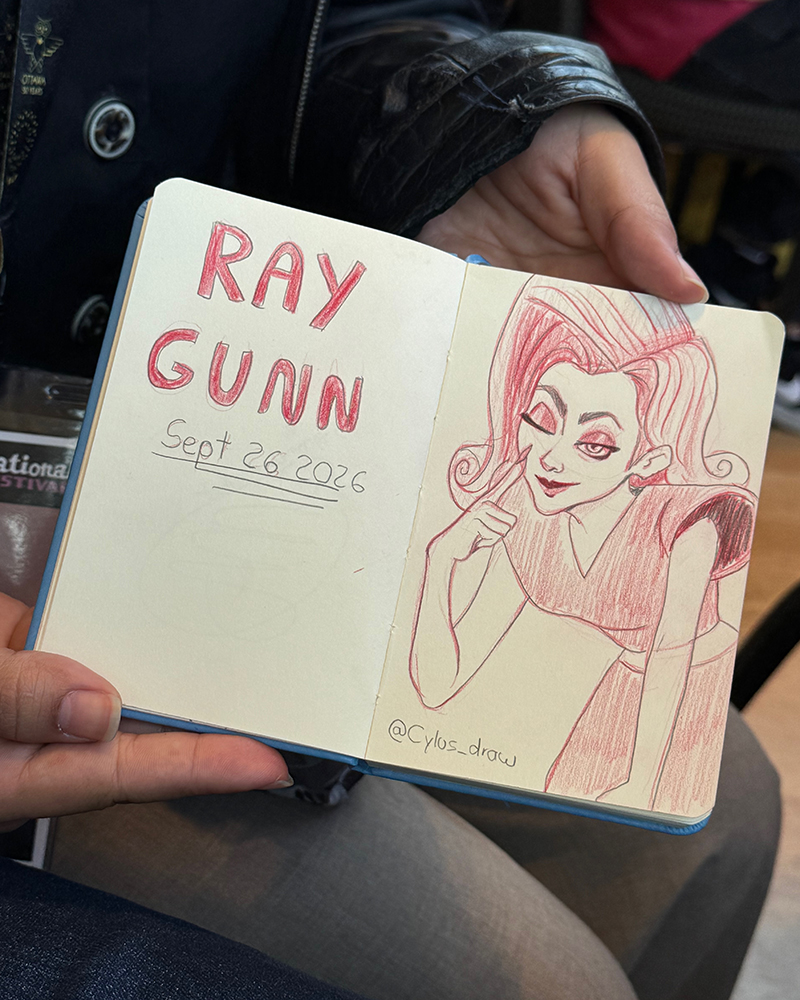
The panel continued with Neysa Bové who designed the costumes for Ray Gunn’s retro-futuristic world. Bové drew inspiration from early 1940s tailoring and streamlined radio designs of the era, combining period silhouettes, materials and textures.
Venus Nova, the film’s female lead, is a famous entertainer whose meteoric rise is matched by her chaotic lifestyle. Bové designed 23 distinct costumes for Nova, each reflecting the character’s evolving presence. To craft her wardrobe, Bové looked directly to golden-age Hollywood screen icons.
“We were inspired by femme fatales from that time period—Lauren Bacall, Jane Russell, Rita Hayworth—and just seeing what they were wearing when they were performing,” Said Bové.
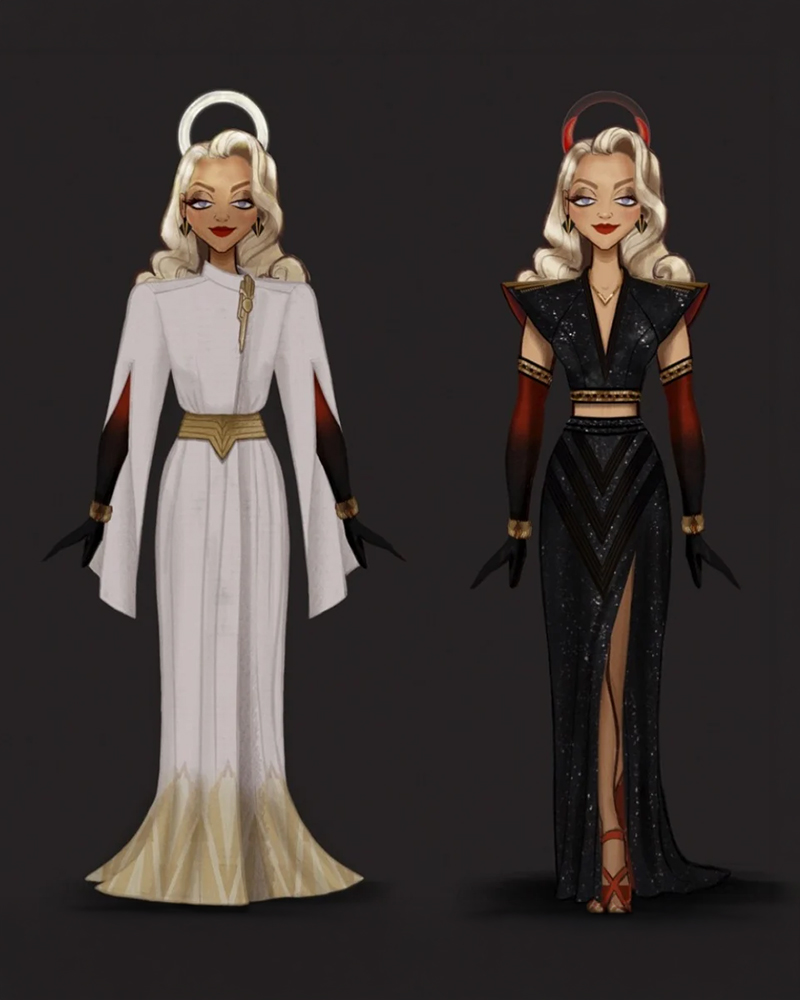
Although the film embraces a retro-futuristic aesthetic, the costume designers deliberately avoided anything that felt overly fantastical, grounding every look in mechanical logic. In one sequence, Nova wears a dress that transforms from an angelic gown into a devilish ensemble.
“When she’s shooting that number where she has to appear as the devil and the angel, we wanted to make sure that it didn’t look magic, but rather technology where she could project and change different colors in real time.” said director Brad Bird. “That’s why she has that circle. The circle can be a halo, but then it can also form the devil horns on a switch. That was the idea.”
Jason Ryan then took the stage to discuss the animation pipeline. He demonstrated an early action sequence in which Ray brawls with a six-armed alien named Vanzine Kaluta. Ryan walked the audience through four iterative passes of the sequence, illustrating the progression from rough blocking to final polished animation.
During the Q&A, Brad Bird was asked what drove him to stick with project for so three decades.
“The truth of the matter is I just really like the idea. Early on in my career I wanted to do an animated feature of The Spirit which is a Will Eisner’s comic strip. We didn’t get to do that, but we tried really hard,” said Bird. “And then when I started working on [this], I just felt like it was an idea that excited me. And every time I thought about it, it just made me want to do it.”
Bird was also asked about working with complete creative freedom outside traditional studio constraints.
“The movies that I’ve made are pretty much the movies the way I wanted them to be, so I have no complaints about that. I will say that I never pitched this movie at Pixar because I wanted it to be a slightly different audience.” Bird explained.“I wanted to aim it at a slightly older audience. If you’re a teenager, I think you’ll like it. But it’s not for 5 year olds.”
Thirty years after its initial spark of inspiration, Bird’s vision is finally coming to life. Blending vintage Hollywood style with cutting-edge digital craft, Ray Gunn is set for a limited theatrical and 15/70 IMAX followed by its global streaming premiere on Netflix.
More info & links:
- Director: Brad Bird
- Writers: Brad Bird, Matthew Robbins
- Cast: Sam Rockwell, Scarlett Johansson, Tom Waits
- Ray Gunn on IMDB
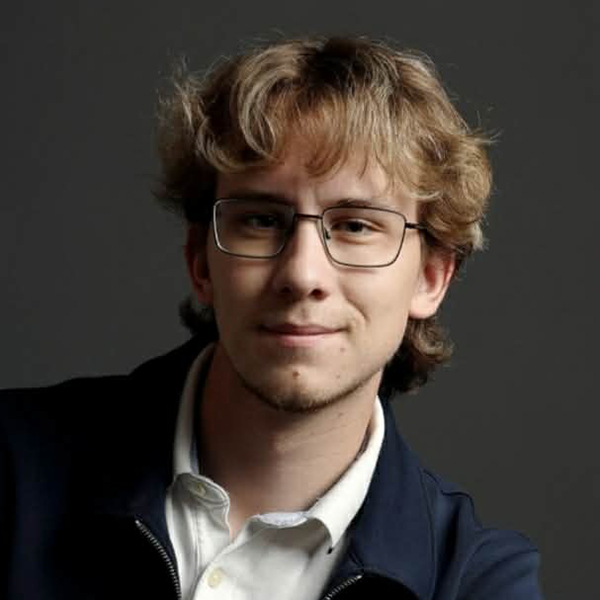
Matthew Grieve
Reporter, Film Reviewer
Matthew Grieve is a journalist currently pursuing his Digital Journalism degree at the University of Ottawa, following his graduation from Algonquin College’s journalism program. He is passionate about life and all its little wonders and is always chasing his next adventure. His ambition keeps him going, and he enjoys meeting new people, sharing stories, and watching movies. One day, he hopes to open a cozy bed and breakfast where he can welcome guests and swap stories with them.
Follow Matthew on Instagram and LinkedIn.
Follow Matthew on Instagram and LinkedIn.


