
Book Review: Panthers and Monkeys and Sharks, Oh My!

Spark Forward is a series of event recaps and essays about film and filmmaking. It is part of Treepot Spark, a collection of initiatives aimed at igniting creativity and collaboration among creatives.
Disney and Marvel seem to have perfected the Hollywood franchise formula: build an interconnected universe, spin off popular characters, sell mountains of merchandise, and keep audiences coming back for the next instalment. But as Ottawa’s own Dan Lalande reveals in his latest book, Panthers and Monkeys and Sharks, Oh My! Film Series of the 1970s, this playbook is far from new. Its roots stretch back to the 1970s, when studios began turning successful movies into sprawling franchises. The 1960s laid the groundwork with James Bond and Planet of the Apes, but the following decade showed Hollywood just how profitable it could be to turn one hit into a whole series. Today’s cinematic universes may be bigger, but the business plan has been around for decades.
Organized as a collection of essays that can be read individually or enjoyed as part of a larger story, the book combines detailed production histories with thoughtful assessments of each film’s strengths and weaknesses. Lalande traces the growth of franchise filmmaking, from Peter Sellers keeping the slapstick alive in the Pink Panther series to 20th Century Fox expanding Planet of the Apes into five feature films, multiple television series, and a heaps of merchandise.

The Airport films turned fears of hijackings and violent crime into disaster-movie spectacles packed with former Oscar winners and television stars, while James Bond got a fresh look when Roger Moore brought his television experience from The Saint and The Persuaders! to the role of 007. Why fix a winning formula when you can give it a new suit and a license to kill?
Beyond the box-office success, Lalonde show how these franchises also reflected the social and political concerns of their time. The Planet of the Apes films, for example, tackled issues including gun control, civil rights, wage inequality, animal rights, and the right to choose. Even Hollywood’s talking apes had plenty to say about the human condition.
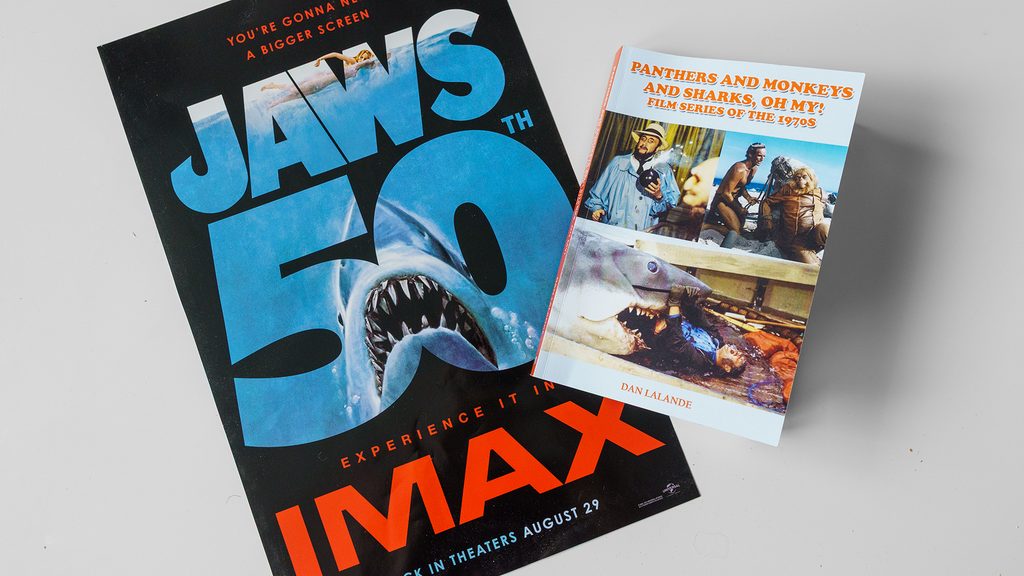
Lalande continues exploring the ideas beneath the surface with Jaws, writing as the film approached its 50th anniversary in spring 2025. He shares the enthusiasm of devoted fans, known in some circles as “fin-atics,” who celebrate the shark thriller with branded beach towels, barbecue shirts, and windshield sunshades. But beyond the memorabilia and anniversary nostalgia, he digs into the film’s political themes, exploring the clash between Hollywood’s profit-driven, unionized world and the community-minded, conservative values of New England. It is a fascinating reminder that even a movie about a giant shark can have some big ideas lurking beneath the surface.
For all its research, the book never feels like a textbook. Lalande writes in a witty, conversational style, even recycling a few lines from his own previous work, which seems fitting for a book about repeating successful material. One especially funny memory involves 1970s news reports about armed “gorillas” on the streets of Northern Ireland. As a child, Lalande was convinced briefly that Planet of the Apes was coming true. His passion for film history is just as evident when he recounts taking his wife on an exceptionally long tour of Jaws filming locations. Some people plan a relaxing holiday. Others turn it into a feature-length documentary.
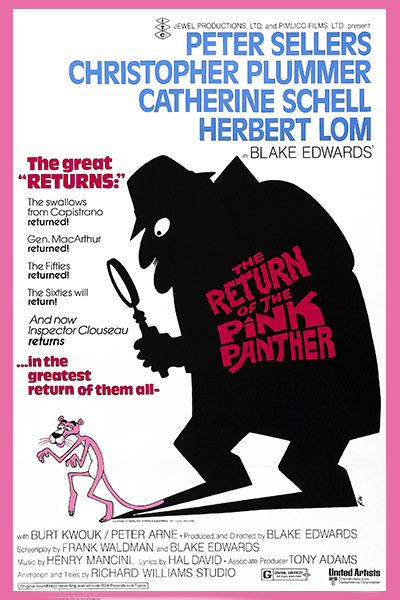
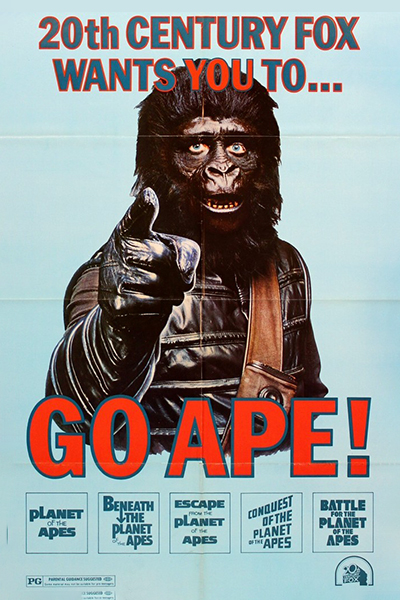
The book is also packed with on-set stills, photographs, and vintage posters, some drawn from Lalande’s personal collection. These images add another layer to the book’s look at how studios sold their franchises to audiences. The posters are especially entertaining, with their wonderfully over-the-top 1970s taglines designed to lure moviegoers back for another round. My favourite is a poster promoting a Planet of the Apes marathon with the glorious command, “20th Century Fox Wants you to… GO APE!” Subtlety clearly wasn’t part of the marketing budget. Why sell one movie when you can sell an entire afternoon of monkeys?
What makes Panthers and Monkeys and Sharks, Oh My! such an enjoyable read is Lalande’s ability to look beyond the movies themselves and explore the business, personalities, politics, and marketing that helped turn them into franchises. He writes with the knowledge of a historian and the enthusiasm of a devoted movie fan. He does not dismiss sequels as worthless cash grabs, but he is not about to pretend that Jaws 3-D is a masterpiece either. His sharp humour makes the book feel like a conversation with a knowledgeable friend over a pint, full of fascinating stories and entertaining movie trivia.
Lalande never gets bogged down in film theory or lectures readers about the state of cinema. Instead, he offers an engaging look at how the franchise-driven, reboot-happy Hollywood we know today came to be. For anyone curious about the history of popular cinema, Panthers and Monkeys and Sharks, Oh My! is well worth a look. Just don’t be surprised if it leaves you wondering which old favourite Hollywood will drag out of the vault next.
More info & links:
- Author: Dan Lalande
- Panthers and Monkeys and Sharks, Oh My! website

Jith Paul
Web Designer, Editor, Film Reviewer
Jith Paul is a communications professional, digital strategist, and filmmaker whose career spans digital systems, platform architecture, and cinematic storytelling. A Waterloo Engineering and Algonquin Television Broadcasting graduate, he founded Treepot Media and co-founded the Ottawa Canadian Film Festival. His award-winning films have screened internationally, including Algebra at Entr’2 marches in Cannes and A Clean Slate, winner of Best Short at Valle d’Itria in Italy. He leads film613, which celebrates local Ottawa–Outaouais screen culture.
Follow Jith on letterboxd. More at jithpaul.com
Follow Jith on letterboxd. More at jithpaul.com